

The fully autonomous car is further away than the optimists thought
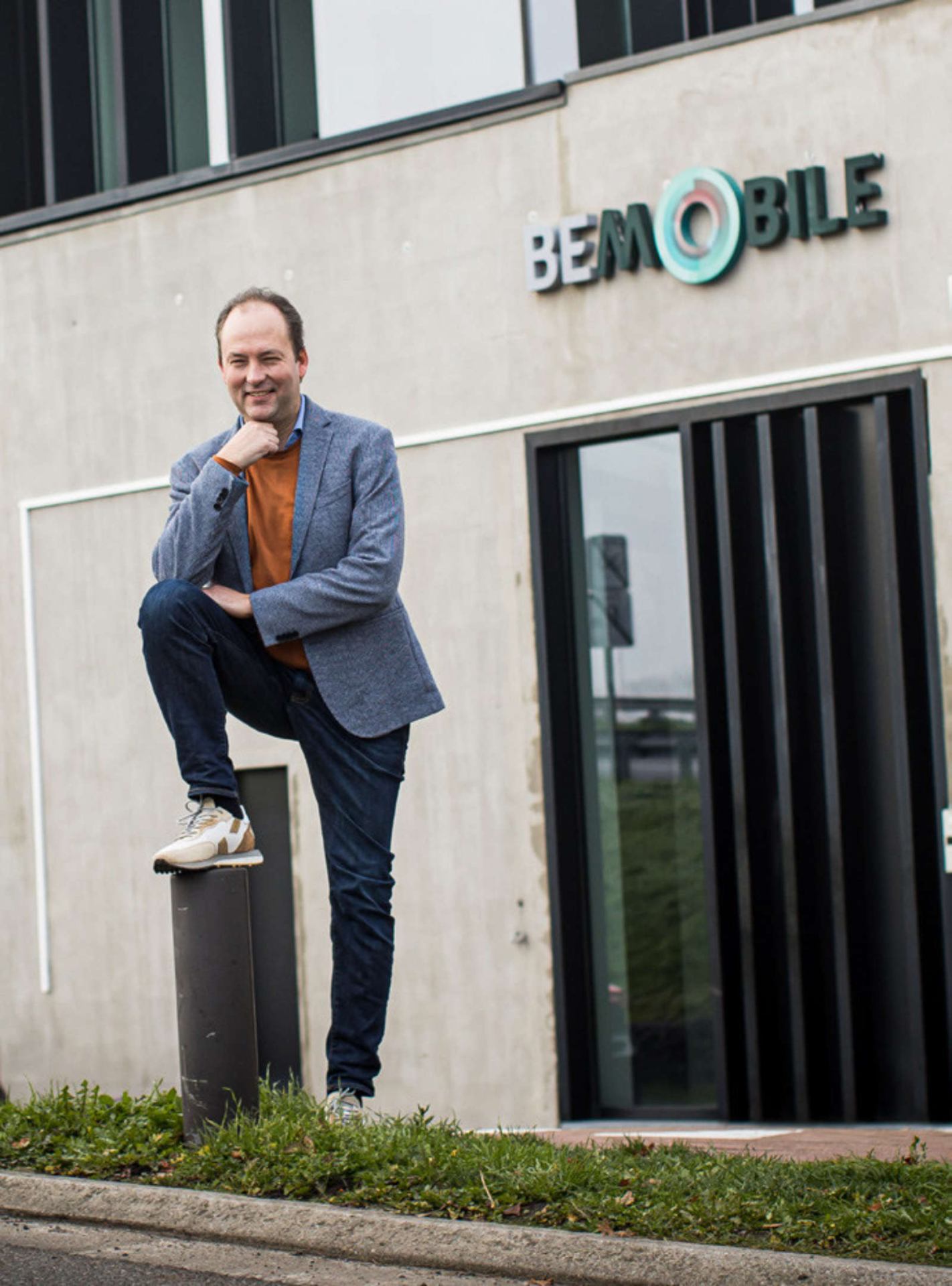
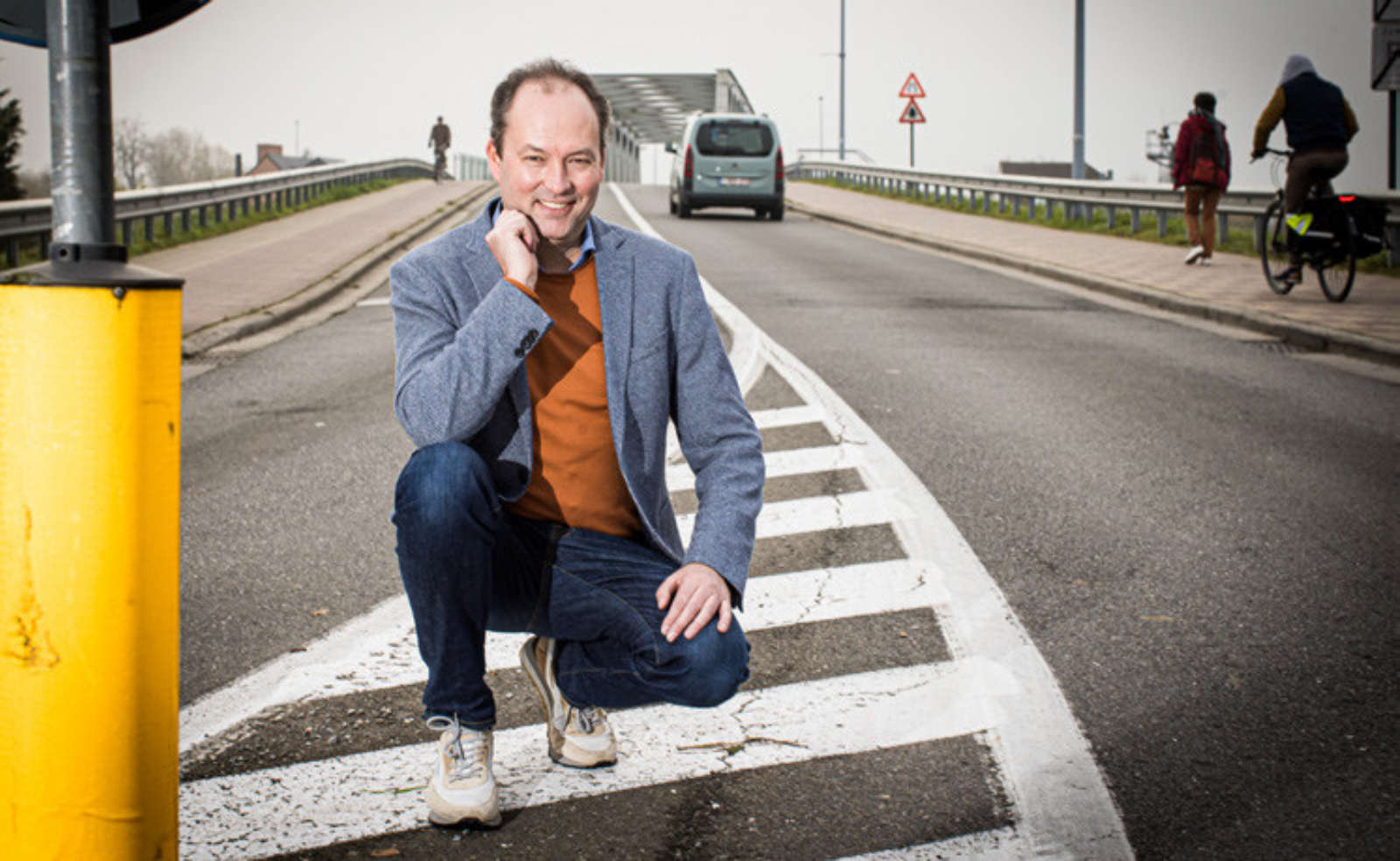
Ten years ago, the optimists believed the self-driving car was a matter of 10, maybe 15 years away. Today it is clear that fully autonomous vehicles are far from tomorrow — if they ever fully arrive. Bart Lannoo, Innovation Director at Be-Mobile since early 2022, is a believer, but he would not be surprised if it takes until 2030–2040, or even 2050, before cars drive themselves end to end. Before joining Be-Mobile, Lannoo worked at imec on connected and autonomous vehicle projects.
What Be-Mobile actually does
Most people know Be-Mobile from traffic information for media, governments and individuals. But Lannoo is quick to widen the picture.
"Be-Mobile has been around for about fifteen years and is mainly active in the Benelux. The Dutch market is as big as the Belgian one. We also have projects in Denmark, Germany, Turkey, Poland and a few more countries. There are 110 people working at the headquarters in Melle and thirty in the Netherlands."
The company is built on historical and real-time traffic data. That data feeds traffic information, historical analysis for governments, and a tool that predicts knock-on effects on surrounding streets when authorities consider closing a road or introducing one-way traffic.
From data to traffic management
Traffic management is where the data turns into action. Parking guidance systems from Be-Mobile route motorists to underground garages and show available spaces on displays — and increasingly inside the car. The same data feeds dynamic signs on freeways, traffic-light control to smooth flow, and priority for ambulances, fire trucks and police.
"We currently have a project underway in the Netherlands, traffic management as a service, in which we want to distribute traffic optimally across the region or city based on prevailing traffic density, accidents and roadworks. That way, the existing road network is used more efficiently."
A further layer is payment and tolling — including the 4411 parking app and the technology behind smart mileage charging.
What "smart" tolling really means
A smart mileage charge means the price depends on place and time of day. Peak-hour driving may cost more than off-peak; a ring road around a small town may be cheaper than the ring road around Brussels or Antwerp. The charge requires knowing where a vehicle is at all times. Whether to introduce it is a political decision. Be-Mobile is currently providing the software that determines exact place and time for a truck-tolling project, so a correct rate can be applied.
Flitsmeister as a data source
Getting information into the vehicle today still runs through the smartphone, primarily via Be-Mobile's own Flitsmeister app.
"In the Netherlands that app is very popular with more than 2.6 million active users every month, and that number is also growing in Flanders. We also have more than ten partners providing data. In Flanders we have about ten percent of vehicles mapped at any given time."
That coverage gives a strong picture of busy roads and highways. In rural areas, counting loops and camera systems fill the gaps.
Where Be-Mobile differs from the global platforms
Lannoo argues local anchoring is the differentiator against players like Google Maps. One of the major criticisms of global navigation apps is that they encourage cut-through traffic. Be-Mobile has started a research project on the most socially acceptable route — one that avoids school districts and residential areas and keeps traffic on main roads as long as possible. With the city of Antwerp, the company is developing a freight route planner that keeps trucks out of school zones during rush hours.
What "level 3" actually means
Mercedes-Benz recently presented the first car certified at level 3 autonomy. Lannoo explains the scale. A level 0 car has no assistance systems; level 5 is fully autonomous. Most cars today sit at level 2 — adaptive cruise control, lane assist — with the driver still in charge.
He recalls the driver who became unwell on the E314 highway and whose level 2 car continued autonomously for 25 kilometres before police stopped it. From level 3, driving becomes mainly the car's job, but the driver must take over when needed. Autonomous speeds are still low — up to 60 km/h on the highway, essentially in traffic jams. Level 2 will soon be mandatory on new cars.
Why level 5 keeps slipping
"In 2010 it was said we would have autonomous vehicles by 2020, they are nowhere near there. The chances are very small that they will be there by 2030, maybe it will be 2040 or 2050."
The core problem is reliability across every road, weather condition and situation. Today, that reliability cannot be guaranteed in too many cases. One side effect: autonomous vehicles are sometimes too cautious. Inserting into traffic or quickly crossing a road is hard because the system wants certainty. A self-driving car will stop at a stop sign for the mandatory three seconds — even with no other road user in sight.
The ethical question — and why connectivity changes it
Should a vehicle crash into a wall to protect a pedestrian, or hit the pedestrian to protect its occupants? Lannoo's answer is that the self-driving car should make sure it never has to make that choice.
"Basically, the self-driving car has a much wider field of vision than humans. It can also look around corners or see what is happening ten cars in front of it because it receives notifications from vehicles in the vicinity that are also equipped with cameras and sensors."
With full information, the car drives smoothly. Without it, it crawls cautiously around corners and into intersections.
The old failure modes are receding — but reliability is still hard
The classic stories — a self-driving car braking hard for a falling leaf, or failing to see a white vehicle in blinding sun — were real problems until a few years ago. Cars now combine cameras, radar and sensors at different frequencies. Progress is real, but thousands of edge cases remain.
Will drivers let go of the wheel?
If the benefits are clear, yes. Drivers can save time, relax or work. And if autonomous vehicles can be summoned on demand, owning a car becomes optional. The condition: the technology has to be on point, and affordable.
Where Be-Mobile fits in the autonomous future
Be-Mobile's role is the exchange of data — between cars, and between cars and infrastructure — plus additional data that helps autonomous vehicles make better decisions. Traffic management matters too: today, the driver decides whether to follow a suggested route. With a self-driving car, that friction disappears. A small detour costs nothing if passengers can work or relax.
In that context, Be-Mobile is the main contractor of Mobilidata, a C-ITS project of the Flemish government. Be-Mobile provides the platform for traffic-data exchange and integrates use cases including intelligent traffic-light control and warnings sent to drivers, cyclists and pedestrians. Other players can connect to the platform. The link to the car is currently via smartphone; in future it can connect directly. Within Mobilidata, Be-Mobile is building the digital road infrastructure of the future, with the aim of increasing road safety and balancing traffic across the network.
So — is the self-driving car coming?
"Today autonomous vehicles are already driving on closed sites, specific locations or fixed routes. The step to driving in the city is still big, there is still a lot of work. But I do think the fully autonomous vehicle will come."
Text: Bart Van Moerkerke. Pictures: Lieven Van Assche.