
Planning a drive from the Netherlands to the south of France should mainly be about choosing a route and deciding where to stop. Increasingly, it also means working out how to pay for road usage or mobility rights along the way.
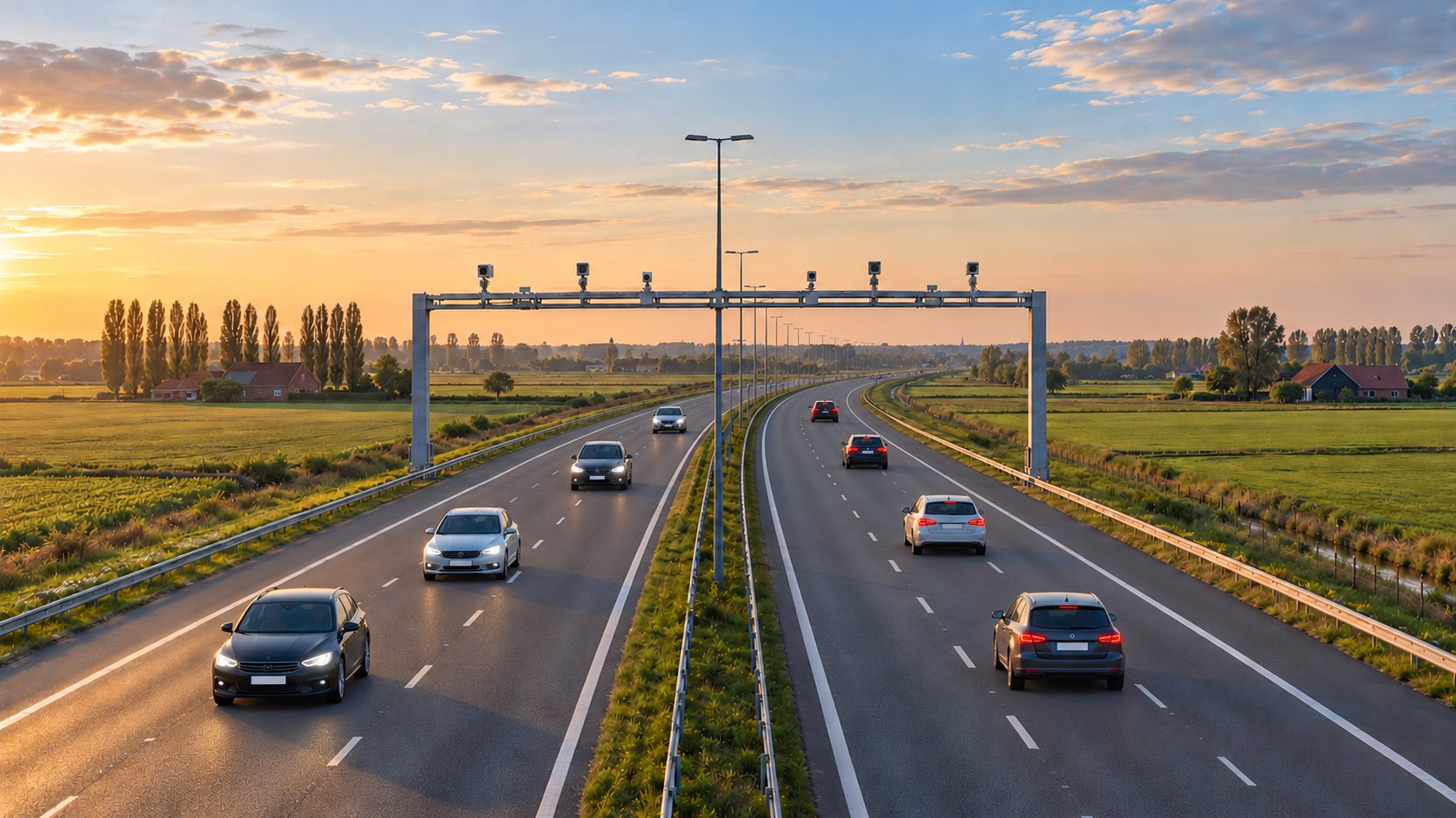
Imagine making that journey in the summer of 2027. Before taking Belgium's motorways, you arrange a digital vignette. In France, you pay at a toll barrier. Further along your route, there may be no barrier at all: on multi-lane free-flow motorways, a camera reads your number plate, and you need to know whether payment is taken care of or whether you still have something to do. Stop overnight in a French city, and your car may also need a Crit'Air sticker to enter its low-emission zone. One journey, several systems, and the same question each time: are we covered, or will a fine land on the doormat when we get home?
As more countries introduce their own road charges, drivers face more systems to navigate. Belgium's planned digital vignette brings a wider European challenge into focus: how can countries fund their roads without making cross-border journeys more complicated? And how can a simple vignette pave the way for charging that reflects actual road use? The answer starts with two choices: making payment work through services drivers already trust, and designing the vignette so it can evolve beyond a flat fee.
Why road funding can no longer rely on fuel excise
Fuel excise has long been one of the main ways drivers contribute to the roads they use, and it was designed for an age of petrol and diesel. It ties what drivers pay to how much fuel they burn. Electric cars burn none, and modern combustion engines need far less per kilometre than the models they replace. The result is an adverse effect of greener mobility: drivers can cover the same distance while their contribution diminishes.
The roads themselves are not getting cheaper to run. Demand for mobility keeps growing, and motorways, tunnels and bridges need constant maintenance and renewal. A shrinking source of revenue is meeting a need that is not shrinking.
Few drivers welcome a new charge, and many feel they already pay enough through fuel excise and road tax. Yet roads do not pay for themselves, and it is a fair principle that everyone who uses them contributes, including drivers who only pass through.
So governments are looking for new ways to fund their roads. The risk lies in how they do it: if every country designs its own answer, the patchwork drivers already face will only grow.
What Europe learned from charging trucks
Europe has faced this patchwork once before, with trucks, and two of its lessons apply directly to cars.
The first is about access. Ten to fifteen years ago, country after country introduced its own electronic toll for heavy goods vehicles (HGVs), each with its own technological setup and interfaces. A haulier driving from northern to southern Europe ended up with a windscreen full of on-board units. The European Electronic Toll Service (EETS) directive offered a way out: one contract with a service provider and one on-board unit, covering multiple toll domains within that provider's network, with one invoice. The national schemes remained, but for the haulier, the provider is the one-stop shop.
The second is about what drivers pay for. Across Europe, trucks still meet both time-based vignettes and distance-based tolls. Belgium chose distance: since April 2016, HGVs pay per kilometre on its main roads, coordinated by the interregional body Viapass. The charge raised about €657 million in its first year of operation and passed €1 billion for the first time in 2024. On 1 July 2026, the Netherlands also switched to a distance-based charge for trucks.
For trucks, Europe moved towards interoperable services. For cars, we risk running into the same problem all over again.
Why the system behind Belgium's digital road vignette matters
The introduction of Belgium's digital road vignette is a sensible first step, but the system behind it will decide whether it eases Europe's growing patchwork of road charging schemes or adds yet another system for drivers to navigate. From 1 May 2027, Belgium plans to require a vignette for cars, vans and campervans up to 3.5 tonnes on its motorways and regional roads. It is linked to the number plate and sold online, through an official website or approved partner organisations. The price depends on the vehicle's Euro emission standard and on the period of validity, from a single day to a full year, with an annual vignette costing between €90 and €125.
For a transit country at the heart of Europe, the challenge extends beyond its own drivers. A digital vignette must also work for people passing through, who encounter different charging systems before and after crossing Belgium. That makes interoperability a design question from the outset.
The question now is how the vignette system is set up. Choices made before its launch, about how it is sold, which data it uses and how it is governed, will shape road charging for years.
One trusted app for every toll: applying the truck lesson to cars
For trucks, interoperability came after the fact: separate national systems had to be connected years after they were built. For cars, governments have the chance to build it in early on.
“Truck drivers crossing the same borders already travel with one contract and one invoice. Car drivers deserve the same: to plan their journey, understand the charges and trust that payment is taken care of, from an app already on their phone.”
That means drivers can rely on one service they already know and trust, whether a mobility, navigation or banking app. A service that tells them which charges apply along their route, where and when they need to pay, and arranges registration and payment for them wherever the schemes allow it.
It also brings transparency. When I drive to the Côte d'Azur with a French toll tag, I only see two or three days later in an app what the trip has cost me. A connected service can show the toll cost of a journey before departure, just as drivers already estimate the cost of fuel.
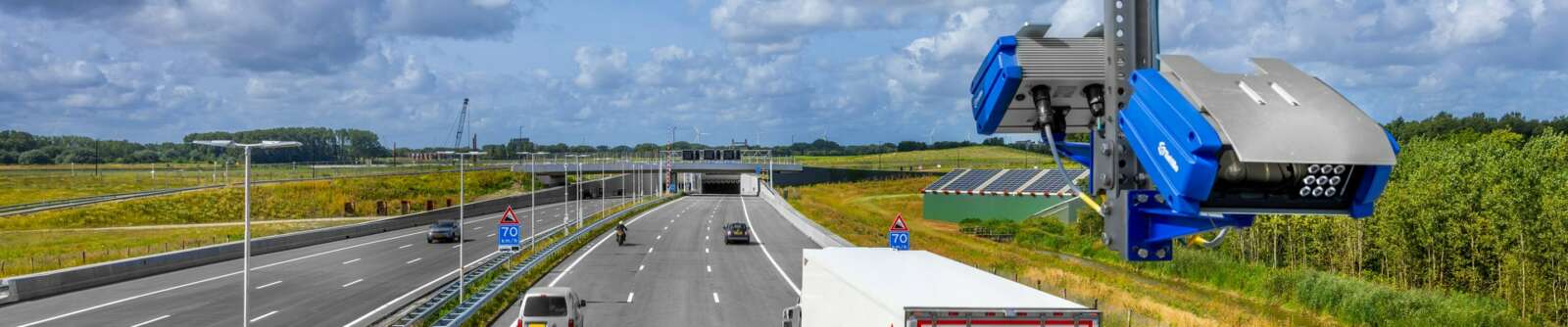
Paying for mobility through an app of choice is already familiar. In many European cities, drivers pay for parking and travellers buy public transport tickets through the app they prefer. In camera-based toll domains such as the A24 Blankenburg connection in the Netherlands, drivers can already settle the toll automatically through a variety of service providers. At Be-Mobile, we support this approach through our Toll Broker Platform, a central gateway that lets service providers connect to multiple ANPR toll domains through one interface, instead of integrating separately with every toll charger. One app for an entire European journey remains the ambition, not yet the reality.
Making the vignette easy to buy answers how drivers pay. It does not answer what they pay for.
Take two drivers with the same type of car and the same annual vignette, both using the motorways and regional roads it covers. One is a pensioner who takes the regional road into town once every two weeks. The other drives hundreds of kilometres a week and spends part of every working day in the queues on the Antwerp ring. Both pay exactly the same. Once the vignette is bought, every extra journey carries no additional road charge, so a flat fee gives no one a reason to drive less or at a quieter time.
Those queues have a price of their own. In the first eight months of 2026 alone, congestion cost the Belgian economy €3.8 billion, 8% more than a year earlier, according to the Belgian Mobility Dashboard. A vignette raises money for the roads, but it leaves that cost untouched.
From a right to drive to a charge that reflects use
Distance-based road user charging links what drivers pay to how much they actually use the road. The pensioner pays for a few kilometres a month; the daily commuter pays for many more. The difference in use becomes visible in what each driver contributes.
Once a system charges by distance, governments can go a step further and let rates reflect where and when people drive. Higher rates on congested roads at peak hours give drivers who have a choice a reason to set off earlier or later, take another route or switch to the train. Singapore has priced its roads by time and place since 1998, and shows that this kind of pricing can steer traffic.
Switching overnight would ask too much at once. Drivers need time to understand and trust a new way of paying, especially one based on distance, and governments need time to put the systems and rules in place. A gradual path gives both that time. Belgium can keep the vignette as an annual, flat-rate mobility right for motorways and regional roads, and offer a distance-based option alongside it at a more attractive price. Drivers who prefer a fixed cost keep the vignette; others pay for the kilometres they drive. Over time, the price difference shows how quickly drivers choose to switch, and the vignette becomes a foundation rather than an end point.
Designing such a system raises practical questions. Not every driver can choose when to travel, and employers, who often set working hours and pay for commuting, have a role to play. Tariffs and alternatives will need to reflect that.
For many drivers, the first question will be about privacy. It is a fair question, and one that can be answered by design: trip data can be kept technically separate from a driver's identity, and those who remain unconvinced can simply keep the flat-rate vignette. We explain how in our whitepaper Privacy and Security in Distance-Based Road Charging. Whether that protection is possible later depends on choices made now.
The choices that keep future options open
A digital vignette can stay a simple charge, or it can become the foundation for a system that connects different charges and can later support distance-based charging. Which one it becomes depends on three choices made early.
- Access through qualified providers. Any qualified service provider, whether a mobility app or even banking app, can offer the vignette, connecting once through one open interface under clear and consistent conditions.
- Recognition regardless of channel. Camera enforcement recognises a valid right wherever it was bought, and drivers receive clear confirmation that they are covered.
- Room for distance-based charging. The system can add a per-kilometre option later, with privacy built into its design.
Countries do not need identical tariffs or identical roadside technology. They do need systems that service providers can connect to in the same way, so that one service can cover a driver's journey throughout Europe. These choices are best made before a system is procured, because contracts and system architecture can make later changes slow and costly.
Build the vignette for the journey ahead
Think back to the drivers heading south. Truck drivers crossing the same borders already travel with one contract and one invoice. Car drivers deserve the same: to plan their journey, understand the charges and trust that payment is taken care of, from an app already on their phone. How Belgium sets up its vignette today can make it the first step towards that. The vignette is coming either way. Whether it becomes one more system to navigate, or the foundation for fairer road charging across Europe, will be decided before it launches.